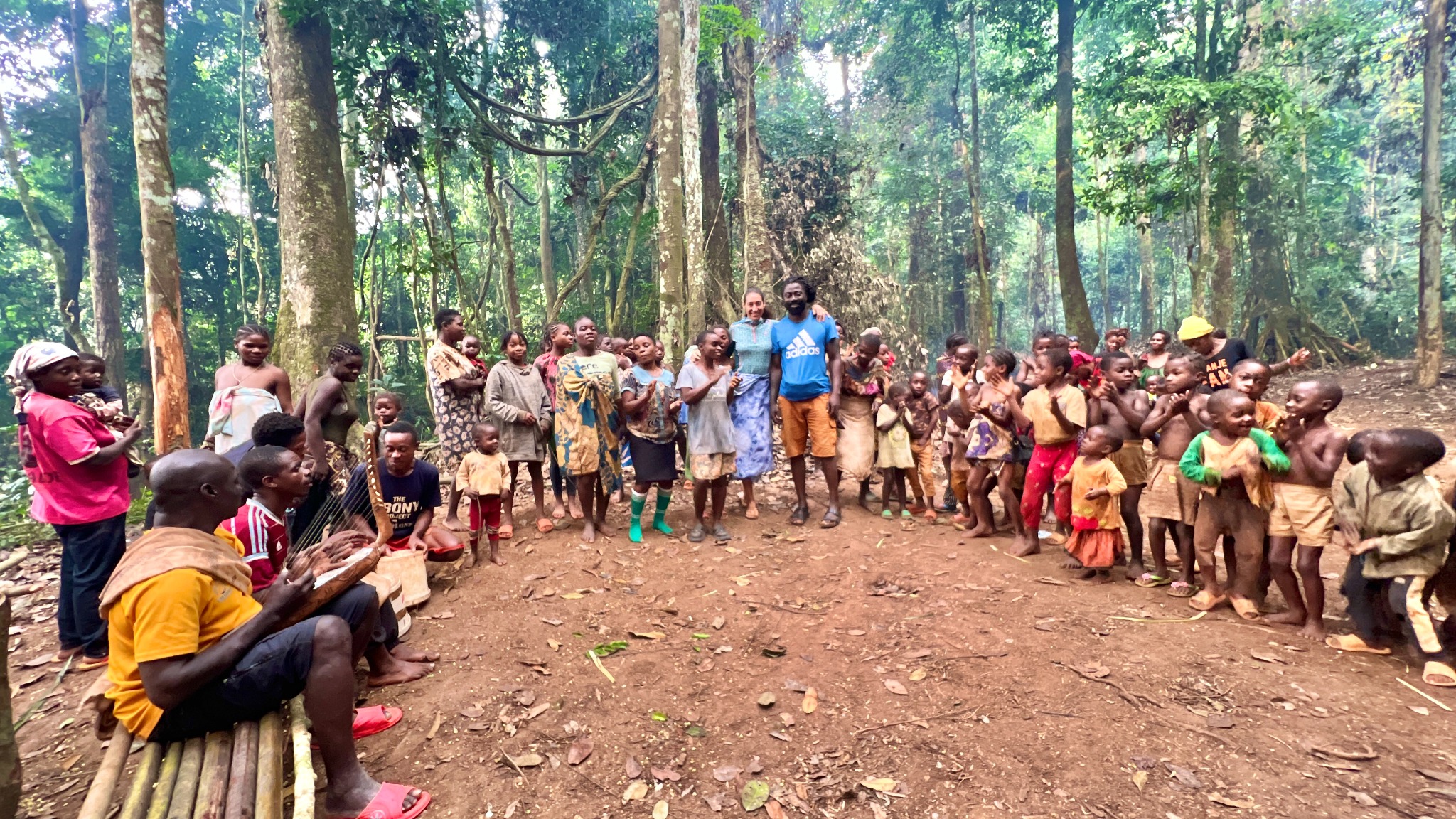
In southeastern Cameroon, researchers working with Baka communities documented how people identify and use wild yams. Finding them takes practice. You need to know which vines to look for, where the tubers grow and when to dig. There are also customs around gathering them. It’s a small example of how much there is to learn about a forest when you spend time with the people who know it well. Read the study on wild edible plants.
Who are the Baka?
The Baka are an Indigenous people whose ancestral territories in Cameroon lie mainly in the rainforests of the East and South regions. Hunting, fishing and gathering have long been part of Baka life. Today, ways of making a living vary from one community to another. Some families combine farming with gathering forest foods and medicinal plants. Access to the forest helps families pass that knowledge on to younger generations. Read more about Baka ancestral territories.
What does Baka music sound like?
In field recordings from Cameroon, you can hear several melodies sung at once. One voice starts a phrase, another joins with a different line, and percussion adds a rhythm of its own. That layering is known as polyphony. Listen to the Smithsonian Folkways recordings to hear how the different parts fit together.
Why access to the forest matters today
A forest can be a source of food and medicine, a place to teach children and somewhere families return to over many years. Restrictions on access can affect all of those things at once. Logging, development and some protected-area rules have made it harder for Baka communities to use parts of their ancestral territories. Baka associations are working to secure access and have a say in how those forests are managed. Read about Forest Peoples Programme’s work in Cameroon.
Visiting a community with Akan Travel
We arrange community visits in advance through a local contact. The people hosting the visit set the pace and decide what they’d like to share. If you’re curious about forest plants, music or daily life, tell your guide what interests you. A good first question is simply, “What would you like us to understand about this place?” For photography or video, ask permission first and follow your hosts’ lead.
Our Cameroon itinerary combines the southern rainforest and the coast near Kribi with time in Yaoundé and the Adamawa highlands. We also arrange private journeys around your dates and interests.
Planning a cultural trip to Cameroon? Tell us when you’d like to travel, how many people are coming and what you’d most like to learn. We’ll help you find a route that fits.
Vodun Days returns to Ouidah, Benin, from 2 to 9 January 2027. Here’s what the organisers have announced, how to plan a visit from Cotonou and what to see in Ouidah between events. Official dates and festival overview.
Ouidah is a place to spend time between ceremonies. In the historic centre, sacred spaces sit close to homes, markets and places of remembrance. On the coast, the Door of No Return marks the area from which enslaved people were forced aboard ships bound for the Americas. A guided visit gives you time to understand both the celebrations and the history of the city that hosts them. UNESCO’s account of Ouidah.
What is Vodun?
Vodun is a living West African religion with deep roots in Benin. Practices differ among communities and religious lineages. They can include devotion to deities, ceremonies, music and dance. During Vodun Days, some activities take place in public squares and at designated venues. When you visit with a guide, ask who is hosting the event, what it marks and what visitors are invited to observe. The festival’s introduction to Vodun.
What can you see at Vodun Days 2027?
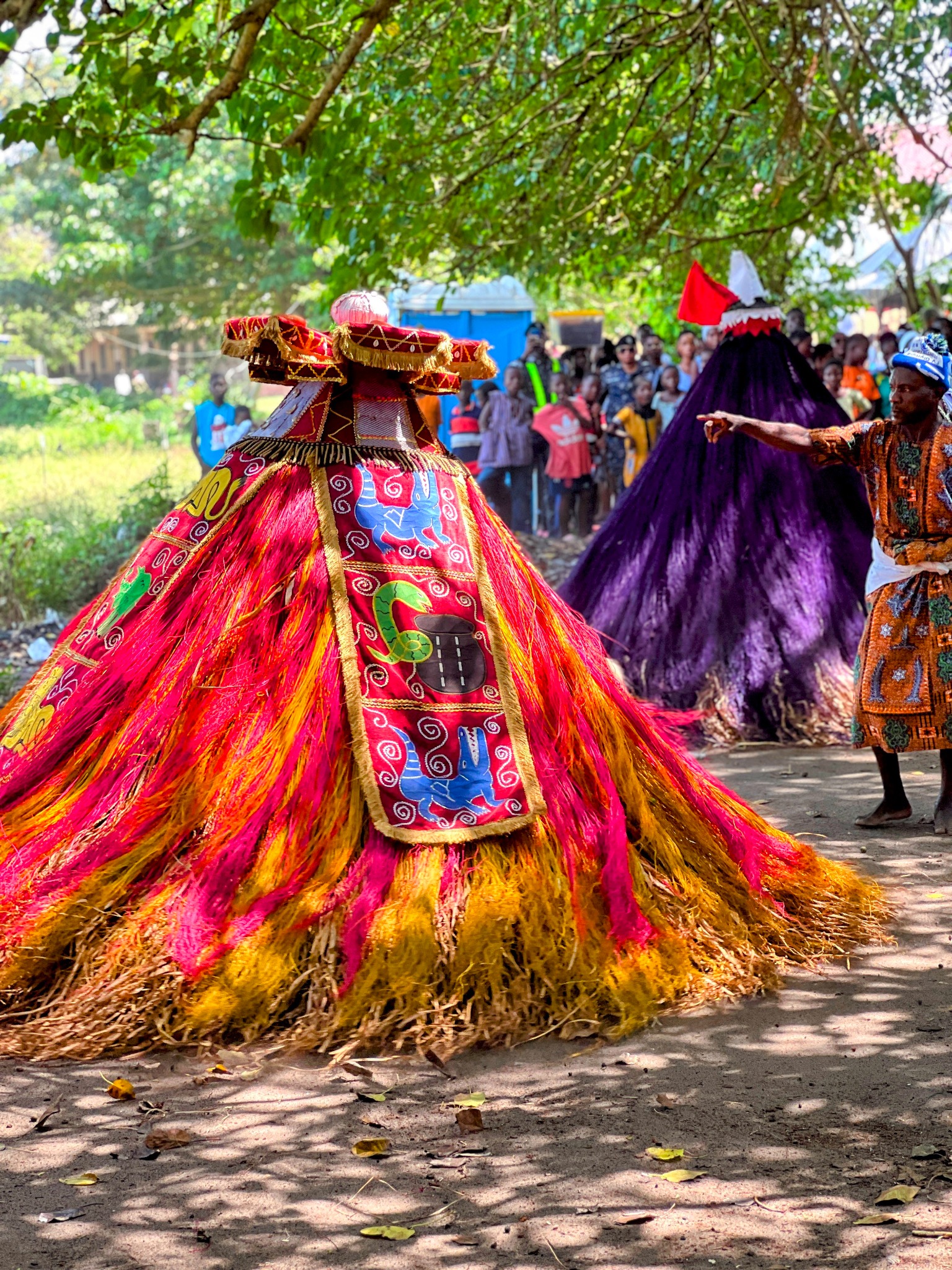
The organisers have announced a Grand Vodun Ceremony, public processions, Hounvè dances, appearances by Zangbétos and Egungun, traditional music, concerts and a festival village. The celebrations take place in and around Ouidah’s historic centre and near the coast. The dates are confirmed, and the organisers will publish the detailed timetable on their programme page. Check it before choosing the day for your guided visit. Official programme updates · Venues and practical information.
What else should you see in Ouidah?
The historic route to the coast and the Door of No Return. A local guide can explain how the city and the embarkation area were connected to the transatlantic slave trade. Give this part of the visit its own time.
Kpassè Sacred Forest. Visit with a guide who can explain the site’s place in Ouidah’s stories and religious life.
The Temple of the Pythons and the historic centre. Explore the area around the temple and learn why the python has religious significance in Ouidah.
Ouidah is about 40 km from Cotonou. The festival estimates roughly an hour by car in ordinary conditions and announces a shuttle between the two cities. Build in extra time on festival days and decide how you’ll return after evening events. Cotonou is a practical base for a day visit. Staying in Ouidah makes sense if you want to spend more than one day at the festival or stay for an evening concert. Transport information from the organisers.
If you have one day, pair a walk through the historic centre with one or two events close to each other. If you have two days, give the coastal memorial sites a separate visit and follow the official timetable for the public celebrations. If you have longer, consider another day for Ganvié, the stilt settlement on Lake Nokoué, or include Porto-Novo and Abomey in a broader journey through southern Benin. Benin’s official tourism guide.
Photography and etiquette
Ask your guide or the hosts before taking close-up portraits or photographing a ceremony. Follow instructions at temples, sacred sites and events, keep processional routes clear and step aside when people need to pass. At memorial sites, give other visitors room to reflect.
Plan a guided Vodun Days visit with Akan Travel
Tell us your travel dates, group size and where you’ll be staying. We can propose a private guided day in Ouidah from Cotonou or a longer Benin itinerary around the festival. Tell us whether you’re most interested in ceremonies, history, photography or a mix, and we’ll suggest a route and send you a quote.
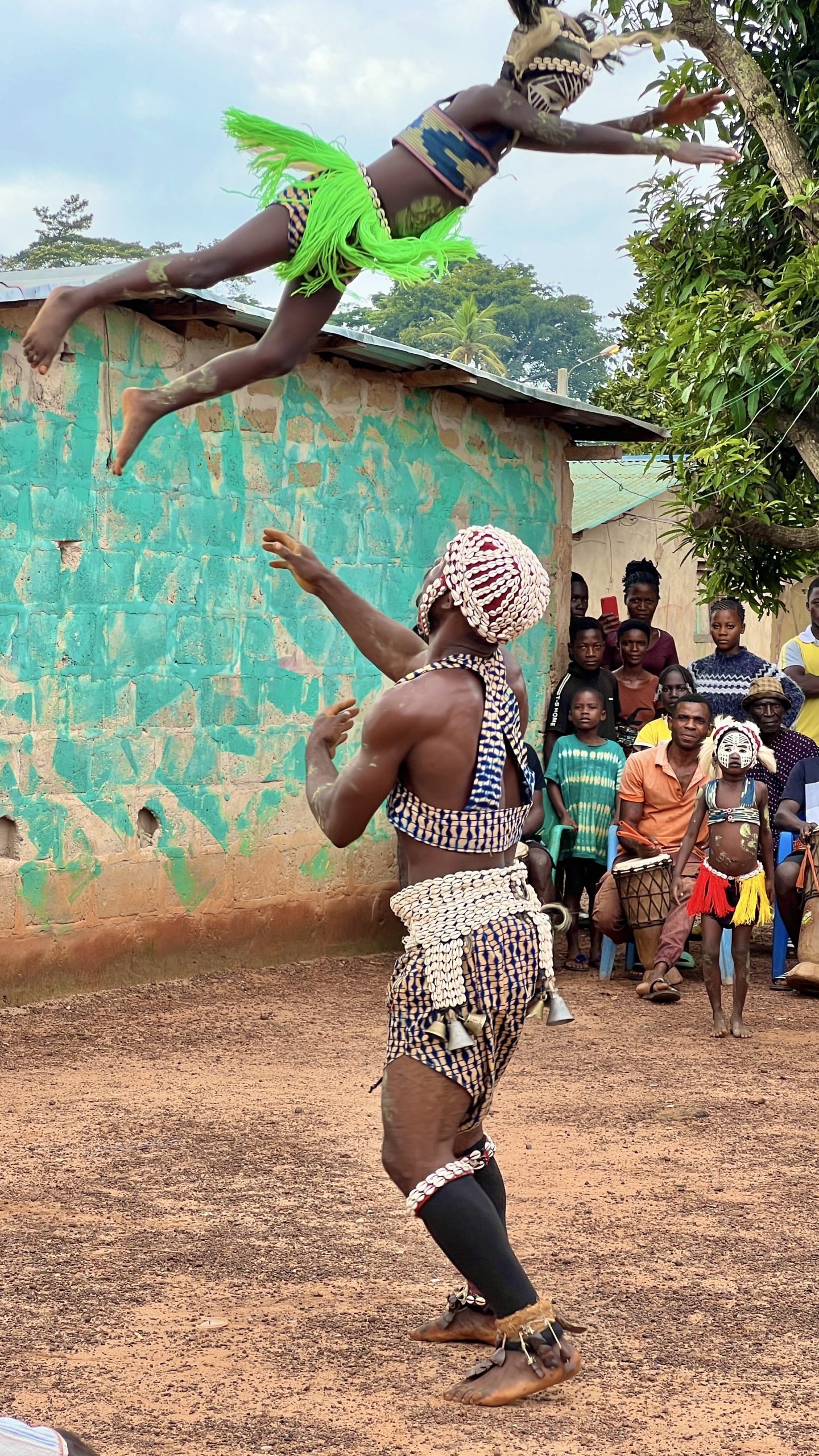
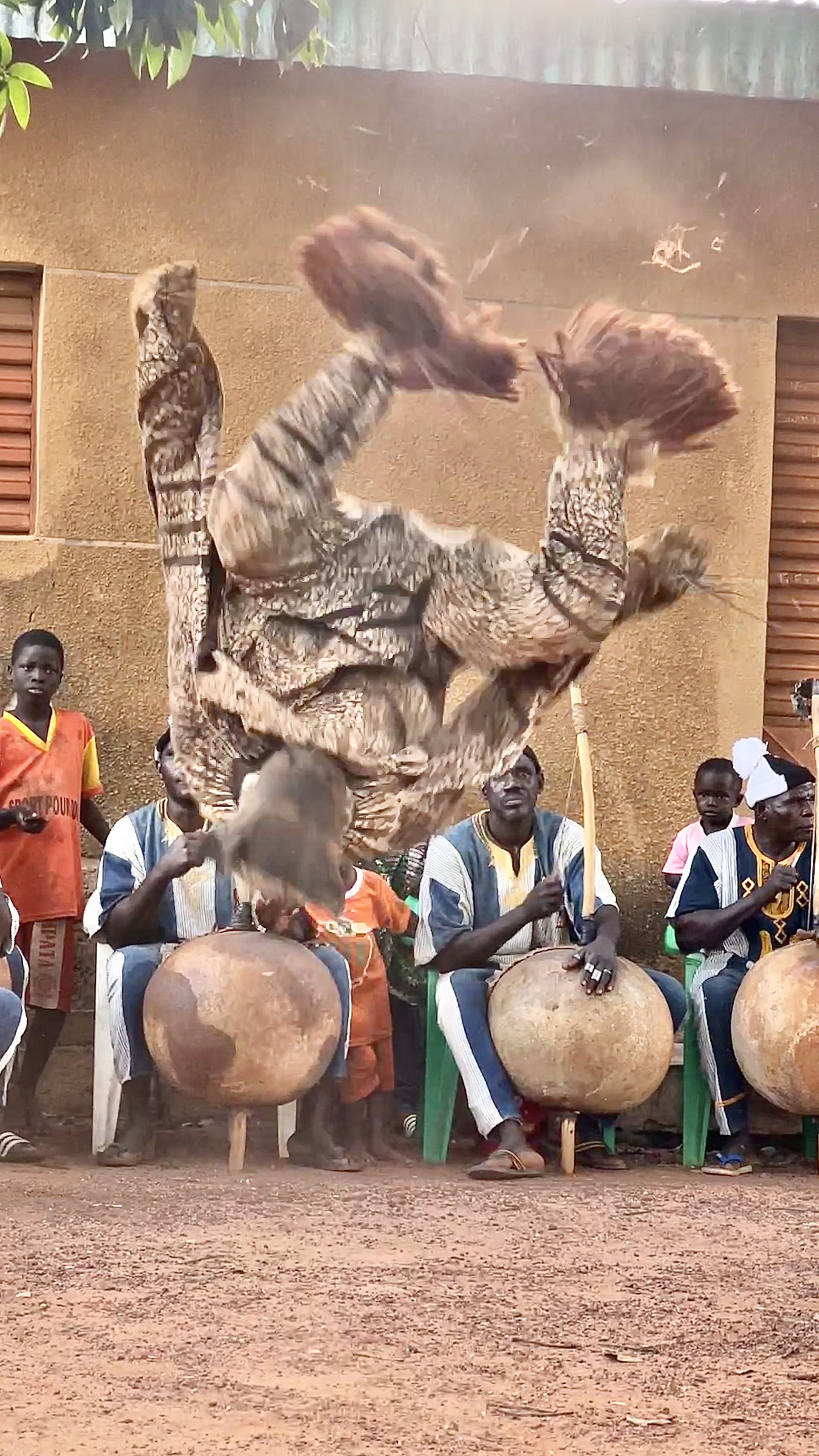
An acrobatic performance photographed during Akan Travel’s journeys in Côte d’Ivoire.
From the rapid rhythms of Zaouli to the panther dancers of the north and the masked stilt performers of the west, Côte d’Ivoire’s dances offer an extraordinary introduction to its cultural diversity. Each tradition belongs to particular communities, with its own stories, occasions and ways of welcoming an audience.
Understanding when a mask appears, who performs the dance and what the occasion means makes an encounter far richer. This guide explores six traditions, drawing on academic research, ethnographic archives and heritage institutions.
At a glance: dances, communities and occasions
Tradition
Communities and region
Documented occasions
Zaouli
Gouro; central Côte d’Ivoire
Community gatherings, festivals and competitions
Boloye / panther dance
Fodonon, a Sénoufo subgroup; north
Funerals, celebrations and public presentations; links with Poro
“Snake girls” acrobatics
Documented among Dan and Guéré; west
The occasion and meaning need to be established with each performing group
Goli
Baoulé, adopted from Wan neighbours; centre
Funerals of important men and entertainment
Masked stilt dancing
Dan and Mahou; west
Locally determined public, festive or ceremonial settings
N’Goron
Sénoufo; Boundiali and other northern localities
Completion of a Poro cycle, celebrations and contemporary presentations
A public presentation and a restricted ritual may involve related traditions while serving different purposes. There is no single national calendar for these encounters: the local community, the occasion and the hosts’ decisions matter.
1. Zaouli: beauty, rhythm and Gouro culture
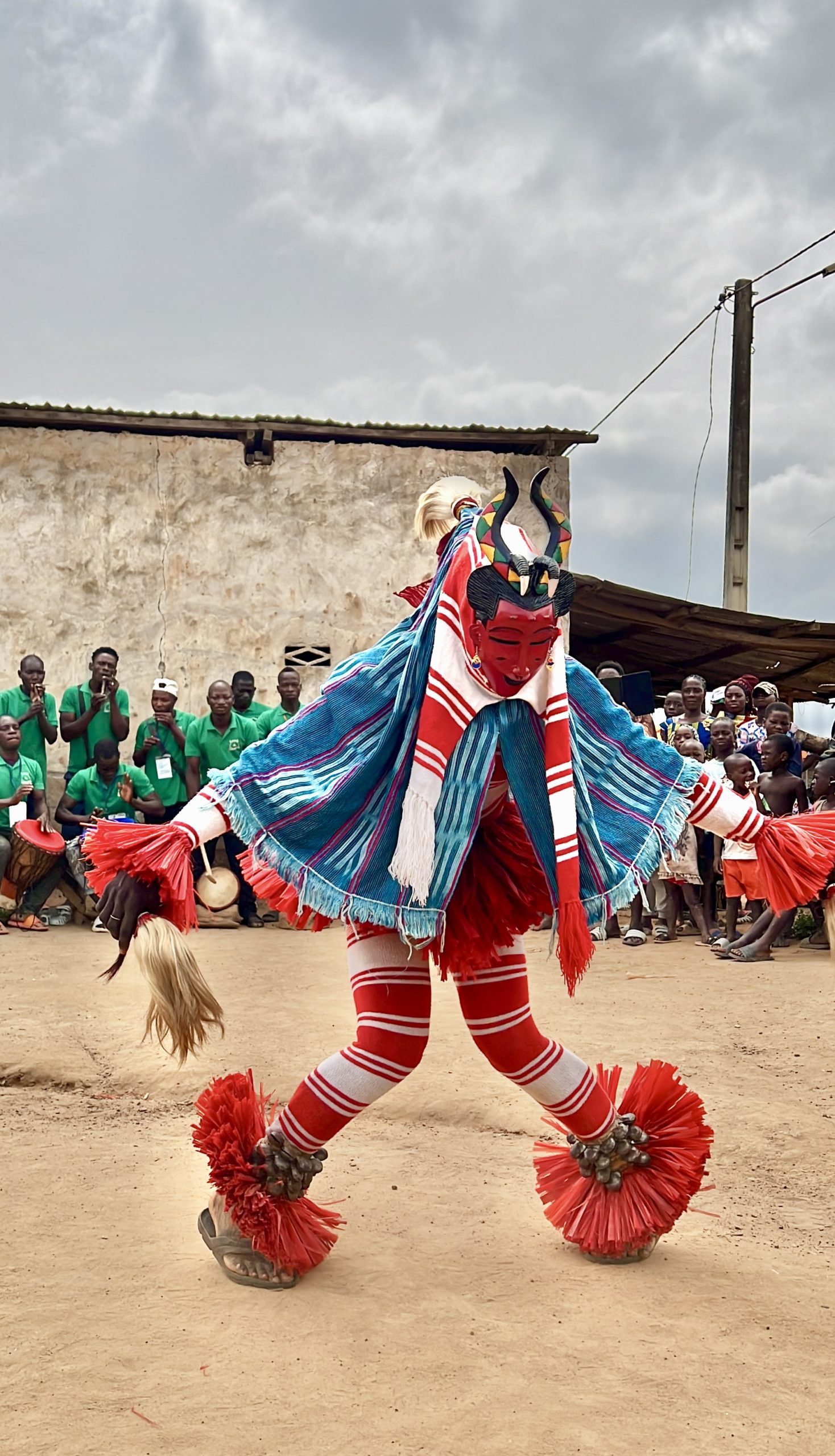
Some dances make you want to follow the rhythm. Zaouli also makes you wonder how music, movement and craftsmanship can come together so completely. To appreciate it is to look beyond the dancer and discover the community behind the performance.
Zaouli brings sculpture, costume, music and movement together.
Where does Zaouli come from?
Zaouli belongs to the Gouro, also written Guro, communities, particularly in the departments of Bouaflé and Zuénoula, in central Côte d’Ivoire. UNESCO inscribed its music and dance on the Representative List of the Intangible Cultural Heritage of Humanity in 2017. [1]
When does the mask appear, and why?
Zaouli is performed at community gatherings, festivals and competitions between villages. UNESCO documents frequent local performances, rather than a tradition limited to one annual ceremony. These occasions bring people together through entertainment, learning and a shared sense of Gouro identity. [1]
What does it mean?
Zaouli honours feminine beauty. Its alternative name, Djela lou Zaouli, means “Zaouli, the daughter of Djela”. Seven types of facial masks are associated with particular stories. Sculpture, costume, song, music and dance form a single cultural expression: the carved face is only one part of the experience. [1]
The popular Zaouli performance also needs to be understood alongside the wider world of Gouro masks. Anthropologist Claudie Haxaire explores relationships between entertainment masks and more complex ritual ensembles. Similar names do not necessarily imply identical functions or meanings. [2]
Experience Zaouli with Akan Travel. Our local knowledge and contacts can help us arrange an encounter with Zaouli and the people who keep it alive. Knowing where to go, whom to speak to and how to understand the occasion adds something special to the experience. The magic lies in that connection: hearing the music, following the movement and discovering what the performance means to its hosts.
2. Boloye: the panther dancers of northern Côte d’Ivoire
Boloye brings acrobatic movement and music together in northern Côte d’Ivoire. Photograph from Akan Travel’s gallery.
Spotted costumes and acrobatic movements explain the name many travellers remember: the dance of the panther men. Yet Boloye, also written Boloy, has a history that reaches far beyond its striking appearance. Boloye and the “panther dance” are names commonly used for the same tradition.
Which community practises Boloye?
Boloye is documented among the Fodonon or Fodonnon, a Sénoufo subgroup, in northern Côte d’Ivoire. A 2024 study by Simon Larsson and Syna Ouattara focused on a performing group in Waraniéné, near Korhogo. Research by Gnénébelougo Silué examines the tradition in Bré. These local accounts help explain its richness without assuming that every Sénoufo community follows the same practices. [3, 4]
When is it performed, and why?
Its history is connected with Poro and the sacred grove. Performances are documented at funerals and community celebrations, as well as public and tourism events. These settings can coexist, each with its own purpose and audience. [3, 4]
What does the panther represent?
The spotted costume explains the familiar “panther men” description. However, interpreting the whole performance simply as a symbol of animal strength would miss much of its meaning. Participants in the Waraniéné study described the music, singing, clothing and movements as recreating a performance originally witnessed among spirits in the forest. This is an oral account recorded by the researchers. [3]
In Bré, Silué highlights Boloye’s educational role and its contribution to community bonds. Even in a public setting, the dance retains connections with the transmission of knowledge. [4]
Discover Boloye with Akan Travel. With our knowledge of the region and our local contacts, we can help arrange an opportunity to experience Boloye and understand its setting. Take time to listen to the musicians as well as watch the dancers: together, they make the encounter memorable. Arrangements follow the hosts’ availability and the occasions they welcome visitors to share.
3. The “snake girls”: an acrobatic tradition of western Côte d’Ivoire
The name is intriguing, but it is only a starting point. The young acrobats often called “snake girls” are known for remarkable flexibility and coordinated movements. Understanding a particular performance means learning who its practitioners are and how they describe their own tradition.
Which communities are associated with it?
The Smithsonian’s film archives hold a 1968 film titled Acrobatic Dance of the “Snake Maidens”, catalogued as Guéré. Its description notes related practices among Dan and Guéré communities in western Côte d’Ivoire and eastern Liberia. [5]
Ethnomusicologist Hugo Zemp also documented dancers performing acrobatics with young girls in the Dan cultural setting, including the region around Man and Danané. [6]
When does it take place?
The documentation confirms a musical performance tradition, but does not establish one ceremonial calendar shared by all groups. The village, performing group and occasion provide the context needed to explain a particular presentation.
What does the name mean? Are masks involved?
The Smithsonian’s description connects the snake comparison with the way the young acrobats wind around their instructor’s body. That description alone does not establish a shared snake cult. [5]
Nor should the name lead us to assume that the girls wear masks. Acrobatics involving children, masked performances and dances involving live snakes need to be distinguished; Zemp mentions different practices in this region. [6]
Explore the traditions of the west with Akan Travel. Our local knowledge and contacts help us place encounters in their proper setting and seek explanations from the people who know the traditions firsthand. When an appropriate public performance is available, we can explore including it in your journey. The most meaningful moments often begin with a conversation that gives a name, a story and a human connection to what you see.
4. Goli: the many faces of a Baoulé mask performance
Goli is often spoken of as though it were a single mask. One of its most fascinating features, however, is the relationship between several characters and the order in which they appear.
Where does Goli come from?
Goli is well known among the Baoulé of central Côte d’Ivoire, who adopted it from their Wan neighbours. The Metropolitan Museum of Art dates that adoption to the first decade of the twentieth century. Its history is also a story of cultural exchange. [7]
When do the masks appear?
Goli may be performed at the funerals of important men, as well as for entertainment. The Smithsonian describes a full, day-long form involving four pairs of masks, organised through a hierarchy of younger and older, male and female characters. A shorter presentation may include only part of the ensemble. [8]
What do the characters mean?
The relationships between the masks are central to the performance. Their order of appearance and colours help express their identities, although colour and gender associations vary between villages. [8]
One character is Goli Glin, a senior male figure. The Metropolitan describes a headdress combining the head of a forest bovine with gazelle horns, worn with a costume of palm leaves. Its choreography is particularly vigorous and fast. [7]
Scholar Fernand Lafargue studied Baoulé Goli as encompassing supernatural power, ritual and an association. The word therefore carries meanings beyond the carved object itself. [9]
Encounter Goli with Akan Travel. Through our local contacts and knowledge of the area, we can help organise a Goli experience where a public presentation is available. Learning which characters are appearing and how they relate to one another brings the performance into focus. It is an opportunity to enjoy an extraordinary visual encounter while gaining a deeper understanding of its local setting.
5. Masks on stilts: balance and presence in western Côte d’Ivoire
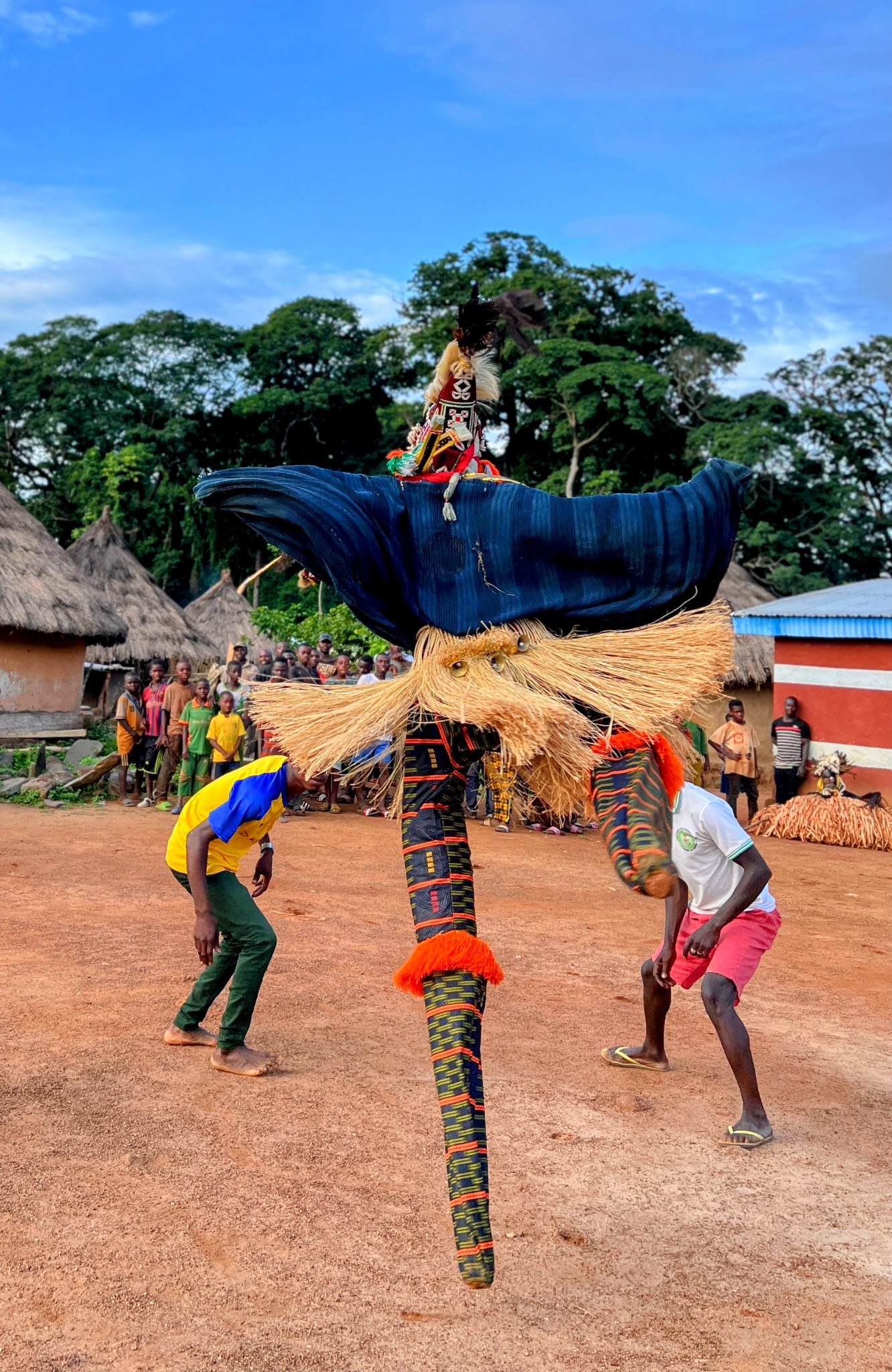
A masked stilt dancer photographed during Akan Travel’s journeys in Côte d’Ivoire.
Height changes the way we experience a dance. As a masked performer moves above the gathering, balance, costume and rhythm transform the space around them. The impression can be unforgettable, especially when someone helps you understand the character you are watching.
Which communities practise stilt dancing?
Masked stilt dancing is documented among the Dan, also known as Yacouba, in western Côte d’Ivoire. Hugo Zemp mentions it in his ethnomusicological research. Official Ivorian educational material also associates stilt dances with Dan and Mahou communities, referring to Man and Touba. A photograph of stilts alone cannot establish the performer’s community. [6, 10]
When does the mask appear?
The occasion needs to be established locally. The sources used here do not support a single annual date, funeral function or initiation ceremony for every stilt performance. A public presentation, a festive gathering and an appearance connected with local ritual obligations each need their own explanation.
What does the mask mean?
As a broader context, the Metropolitan explains that certain Dan masks give visible form to forest spirits and participate in religious and political life. It also emphasises how difficult their functions can be to identify once they are removed from their performance setting. [11]
This helps explain their importance without assigning every stilt character the same spirit or role. Height and skill are visible; the character’s name, responsibilities and rules are matters of local knowledge.
Discover the west with Akan Travel. Our familiarity with the region and our local contacts can help us find opportunities to experience these performances and understand the occasion. We work around the hosts’ arrangements, allowing room for encounters that feel personal and memorable. Seeing the dancer is impressive; learning the story of that particular appearance gives the moment lasting meaning.
6. N’Goron: dance, generations and celebration in Boundiali
In Boundiali, N’Goron offers an introduction to the relationship between dance, learning and social recognition in Sénoufo life. Sometimes described to visitors as the dance of the “young virgins”, its story involves a much wider circle of participants.
Which community does N’Goron belong to?
N’Goron is a Sénoufo tradition, particularly associated with Boundiali and its surroundings in the Bagoué region. Ivorian educational documentation also places it in other northern localities. [10]
When is it performed, and why?
Mamadou Fofana’s research in Boundiali, undertaken in 2014–2015, connects the dance with the completion of a Poro initiation cycle. It describes a seven-year cycle involving periodic attendance in the sacred grove, followed by learning the dance. The celebration recognises the initiates’ efforts and their new position in the community. [12]
The same study documents performances at weddings, funerals, receptions and on contemporary stages. A visitor may therefore encounter N’Goron in several settings, each with its own significance. [12]
What does it mean, and why the reference to “virgins”?
N’Goron expresses belonging, learning and relationships between generations. Young men and women, musicians, traditional authorities and the audience all contribute. Fofana records virginity as a traditional condition of female participation in the context he studied. This should not be treated as a statement about any present-day dancer’s personal life. [12]
A Sénoufo cultural repertoire also describes local dance competitions and costumes decorated with cowrie shells. These variations are best understood in the communities where they occur. [13]
N’Goron is presented here as a collective dance, rather than a performance centred on one mask.
Experience Sénoufo culture with Akan Travel. Our knowledge of northern Côte d’Ivoire and our local contacts can help us organise a meaningful encounter with Sénoufo culture, including N’Goron when a suitable performance is available. Music, movement and the welcome of your hosts can turn a visit into something magical. We shape the experience around the local setting, giving you time to listen, understand and connect.
A more personal way to experience Côte d’Ivoire
Personal encounters are at the heart of our journeys. The hosts and the occasion shape each experience.
Our local knowledge and contacts help us organise authentic cultural encounters that can become the most magical memories of a journey. We take time to understand the setting, speak with the people involved and build a route around the experiences available during your visit.
Tell us which traditions interest you and when you would like to travel. We can explore suitable opportunities as part of a private journey or a longer cultural expedition. Specific performances depend on local availability and community arrangements.
This guide draws on academic publications, a university dissertation, ethnographic archives, museum collections and heritage documentation. Historical accounts and local studies provide context; they are not universal descriptions of every present-day performance.
Food, markets and meals worth travelling for — from golden alloco to the traditions behind attiéké.
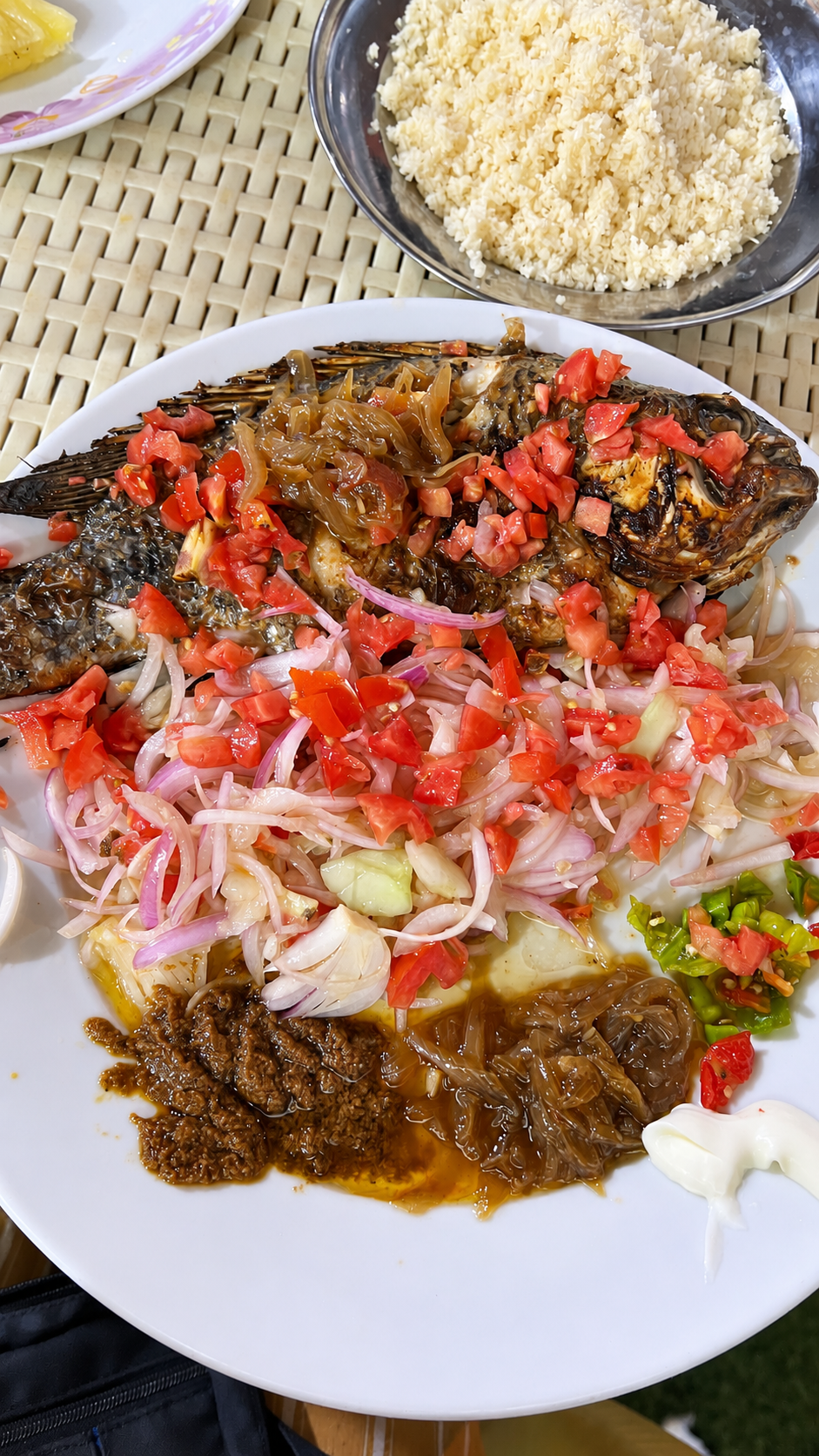
A plate of grilled fish arrives with attiéké, sliced onions and a small helping of chilli. Beside it, golden pieces of alloco are still hot from the pan. Around the table, someone reaches for another piece of plantain while the conversation continues.
Food is one of the pleasures of travelling in Côte d’Ivoire. It also offers a way into the country’s everyday life: the work of women making attiéké, the rhythm of a neighbourhood maquis, and the connections between fishing communities, markets and family kitchens.
For curious travellers, there is plenty to discover beyond the restaurant menu.
Attiéké: a taste of Ivorian identity
Attiéké looks a little like couscous, but it is made from cassava. Fermented, processed into small grains and steamed, it has a light texture and a gentle tang that works beautifully with grilled or fried fish.
Its roots lie in the lagoon communities of southern Côte d’Ivoire, where women have passed down the skills of making it through generations. Behind a seemingly simple serving is a demanding process, involving several stages of preparation before the grains reach the table.
In 2024, UNESCO inscribed the skills related to attiéké production on its Representative List of the Intangible Cultural Heritage of Humanity. The recognition celebrates the knowledge, transmission and community life surrounding its production.
When an opportunity to meet producers is arranged with their agreement, watching part of this process adds another dimension to a meal you may already have enjoyed several times during your journey.
Garba: an Abidjan favourite
Garba brings together attiéké and fried tuna in a filling meal closely associated with everyday life in Abidjan. It is a popular, affordable dish, eaten across different social groups.
For visitors, trying it offers a chance to get to know a different side of the city’s food scene. A modest food stall can be just as memorable as a restaurant, especially when someone familiar with the neighbourhood helps you understand what to order and how it is served.
Alloco: golden, sweet and hard to resist
Alloco is made from ripe plantain, cut into pieces and fried until golden. The outside takes on a caramelised flavour while the centre stays soft.
It can accompany fish or chicken, or be served with eggs and a tomato and chilli sauce. The combination of sweet plantain and savoury, spicy accompaniments makes it an easy favourite.
It is also a useful introduction for travellers unfamiliar with Ivorian cooking: order a portion for the table and discover how quickly it disappears.
Grilled fish and chicken
Poisson braisé and poulet braisé are familiar sights on Ivorian menus. Served with attiéké, they make an inviting first meal for visitors discovering the country’s cuisine.
Along the coast, a fish lunch can become part of a wider day exploring the relationship between communities and the sea. In Grand-Bassam, encounters with Nzima fishing communities can bring visitors closer to the work behind the meal, from fishermen bringing in their catch to women preparing and smoking fish.
These encounters depend on people’s availability and willingness to welcome visitors. Take time to talk, and ask before photographing someone at work.
Kédjénou, foutou and the pleasure of a good sauce
There is much more to discover beyond the grill.
Kédjénou is a slow-cooked dish, commonly prepared with chicken and vegetables in a covered pot. Foutou, made with plantain or yam, is served with sauces such as sauce graine, made from the pulp of oil-palm fruit. Another dish to look for is placali, a cassava preparation often paired with okra sauce.
Recipes and accompaniments vary between regions and households. Trying these dishes introduces different textures as well as flavours, from the soft consistency of foutou to the distinctive texture of okra.
Ask what is cooking that day. A conversation about a sauce, an ingredient or a family recipe can be as rewarding as the meal itself.
Make time for a maquis
A maquis is a popular local place to eat and drink, often with music or a television contributing to the atmosphere. These informal establishments are an important part of the urban food scene.
Leave room in your itinerary for a relaxed meal. Order something unfamiliar, ask for the chilli separately if you prefer, and enjoy the time around the table.
Discover Côte d’Ivoire through its food
A market visit, a conversation with an attiéké producer or a fish lunch in Grand-Bassam can help connect the places you visit with the people who live and work there.
At Akan Travel, we believe these everyday encounters deserve a place alongside the country’s festivals, landscapes and cultural heritage.
Photography: Cover: Akan Travel, from an original photograph, retouched for light and colour. Alloco: Jacquitoz, Wikimedia Commons, CC BY-SA 4.0. CC BY-SA 4.0 applies to the alloco photograph.
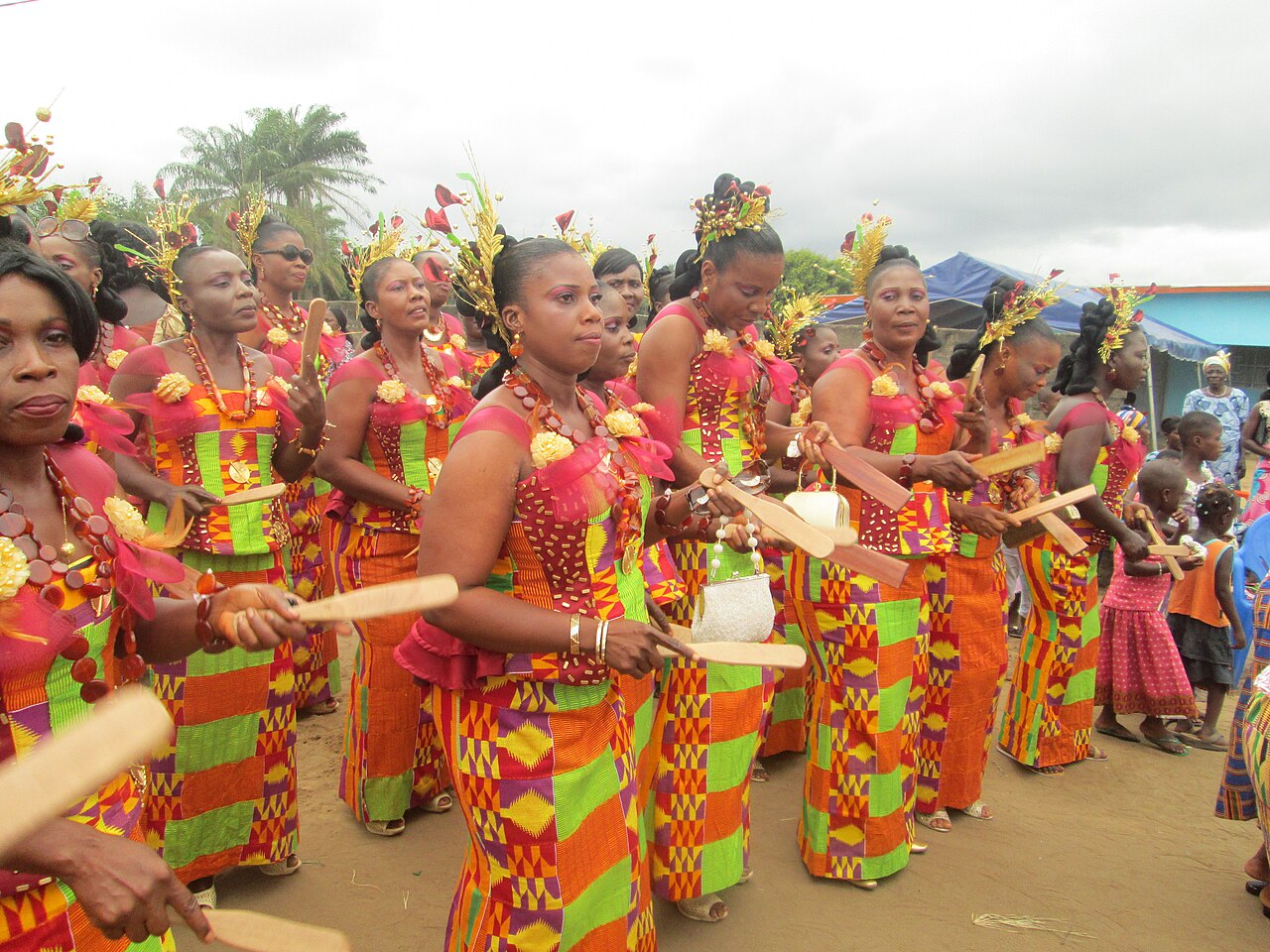
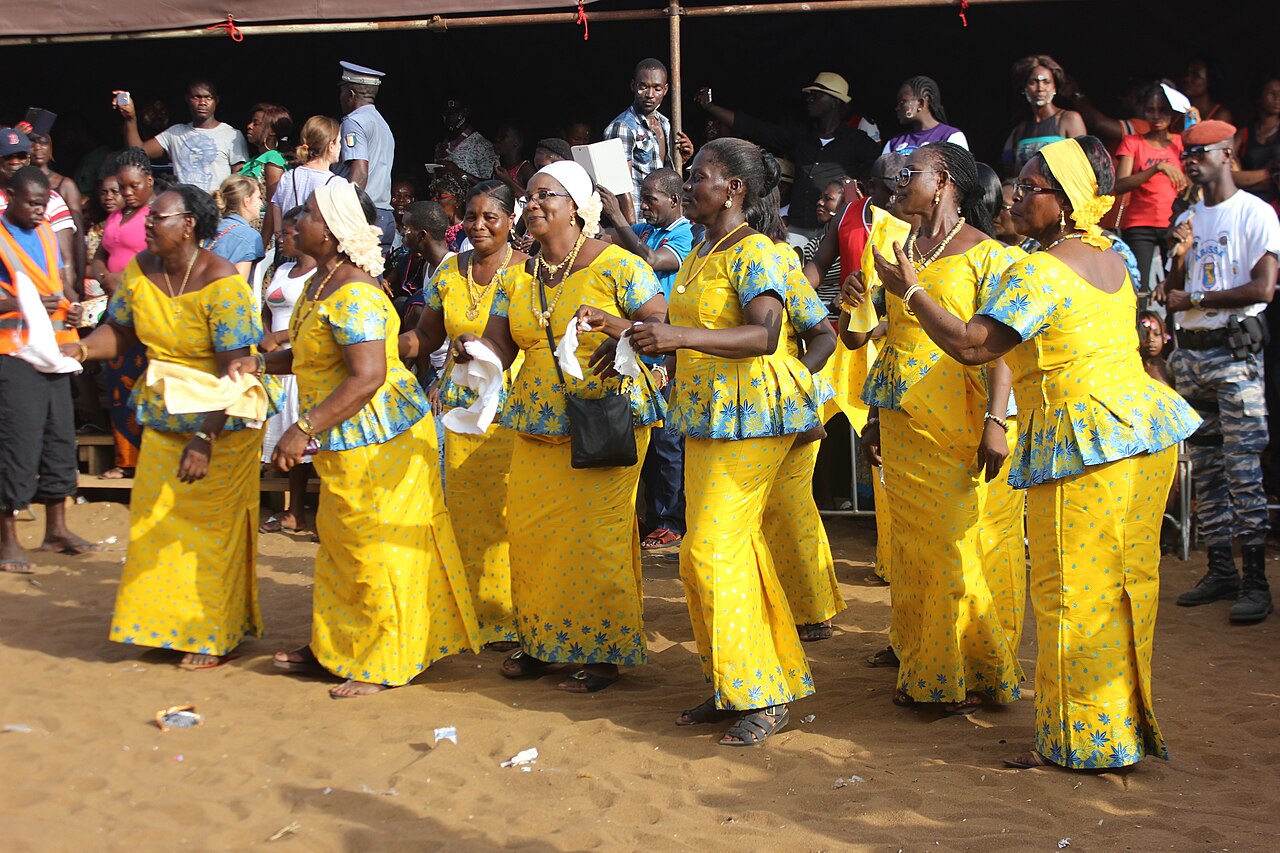
In Côte d’Ivoire, a festival can bring an entire community home. Relatives return to their villages, ceremonial cloth and jewellery emerge from family wardrobes, and music accompanies moments that carry meaning far beyond the day’s celebrations.
For travellers interested in people, history and anthropology, these gatherings offer a window into living traditions. Abissa, the fêtes des générations and the yam festivals reveal different ways of renewing community ties, passing on responsibility and honouring the ancestors. Understanding those differences makes a visit much more rewarding.
Abissa: renewal and reconciliation in Grand-Bassam
In the historic coastal town of Grand-Bassam, Abissa is one of the best-known celebrations of the N’Zima people. It combines dancing and public festivities with a sacred period of renewal, purification and reconciliation.
At its heart is the sacred drum, Edo N’Gbolé. Its ceremonial return marks an important stage in the celebrations. Around the public gatherings, music, coordinated dances, colourful clothing and the participation of different generations give Abissa its distinctive atmosphere.
Abissa also creates space for social reflection. Through forms of public expression and criticism, the community can acknowledge wrongdoing, address tensions and reaffirm the values that hold it together. The joy and spectacle belong to a celebration with a deeper purpose: beginning again as a community.
When to visit: Abissa is generally associated with October and November, but its programme can change from year to year. Confirm the dates and the public events before arranging your stay; not every stage of the celebration is open to visitors.
Fêtes des générations: belonging, maturity and responsibility
A fête des générations is closely connected to the way a community organises itself. Among the Atchan, also known as Ebrié, people belong to named generations and age groups that carry social responsibilities. Ceremonies can mark maturity, public recognition and the passing of responsibilities within village life.
In Atchan communities around Abidjan, Bingerville and Songon, the celebration is often known as Fatchué or Afatchué. Processions, ceremonial dress, music and warrior dances express the identity and cohesion of the groups taking part. The spectacle makes more sense when a local guide explains who is entering, who is being honoured and what role that group holds.
Related generational traditions also exist among other communities in southern Côte d’Ivoire, including the Adjoukrou. Their institutions and ceremonies differ: the Adjoukrou Ebeb, for example, is associated with the renewal of traditional authority. These celebrations should not be treated as one uniform festival.
When to visit: there is no single national date. Each village follows its own cycle, and a major transfer of authority may take place only after many years. For 2027, the relevant village and the nature of its ceremony need to be confirmed locally.
Yam festivals: gratitude, ancestors and a new beginning
The Fête des Ignames celebrates much more than an important food crop. In several communities, especially among Akan peoples, the yam connects the harvest with collective memory, ancestral protection and the renewal of the traditional year.
Rituals may include offerings of the first yams, libations, prayers and ceremonies involving chiefs, royal courts or spiritual leaders. In some traditions, the newly harvested yam may only be eaten after the required rites. Public celebrations can include dancing, music, processions and shared meals, although practices vary considerably between communities.
The calendar varies just as much. In the Indénié kingdom around Abengourou, recent celebrations have taken place in February or March. Other communities celebrate later: Agnibilékrou has held its festival in November, while Bédiélouo celebrations in the Moronou have taken place in December. These examples are useful context, rather than a fixed schedule for future visits.
When to visit: choose the community first, then confirm its dates. There is no single “yam festival week” across Côte d’Ivoire. We will need local confirmation of the 2027 celebrations before building a journey around them.
How to experience these celebrations respectfully
Public festivities and restricted rites may be part of the same event. A place in the crowd does not automatically mean access to every ceremony. Ask before photographing people, follow instructions around sacred objects and processions, and allow your guide to explain where visitors are welcome.
Flexibility matters, too. A ceremony may follow a rhythm that is different from a tour timetable. Leaving time to listen, observe and understand often creates the most memorable encounters.
Plan a cultural journey with Akan Travel
From our base in Grand-Bassam, Akan Travel can help you explore Côte d’Ivoire through its communities and living traditions. Tell us your travel dates and what interests you, and we can enquire with local contacts about celebrations that may coincide with your stay. Access remains subject to the community’s agreement.
Planning a trip in 2027?Contact Akan Travel to discuss a private cultural journey, or explore our Côte d’Ivoire tour. Festival attendance is arranged only when dates and visitor access have been confirmed.