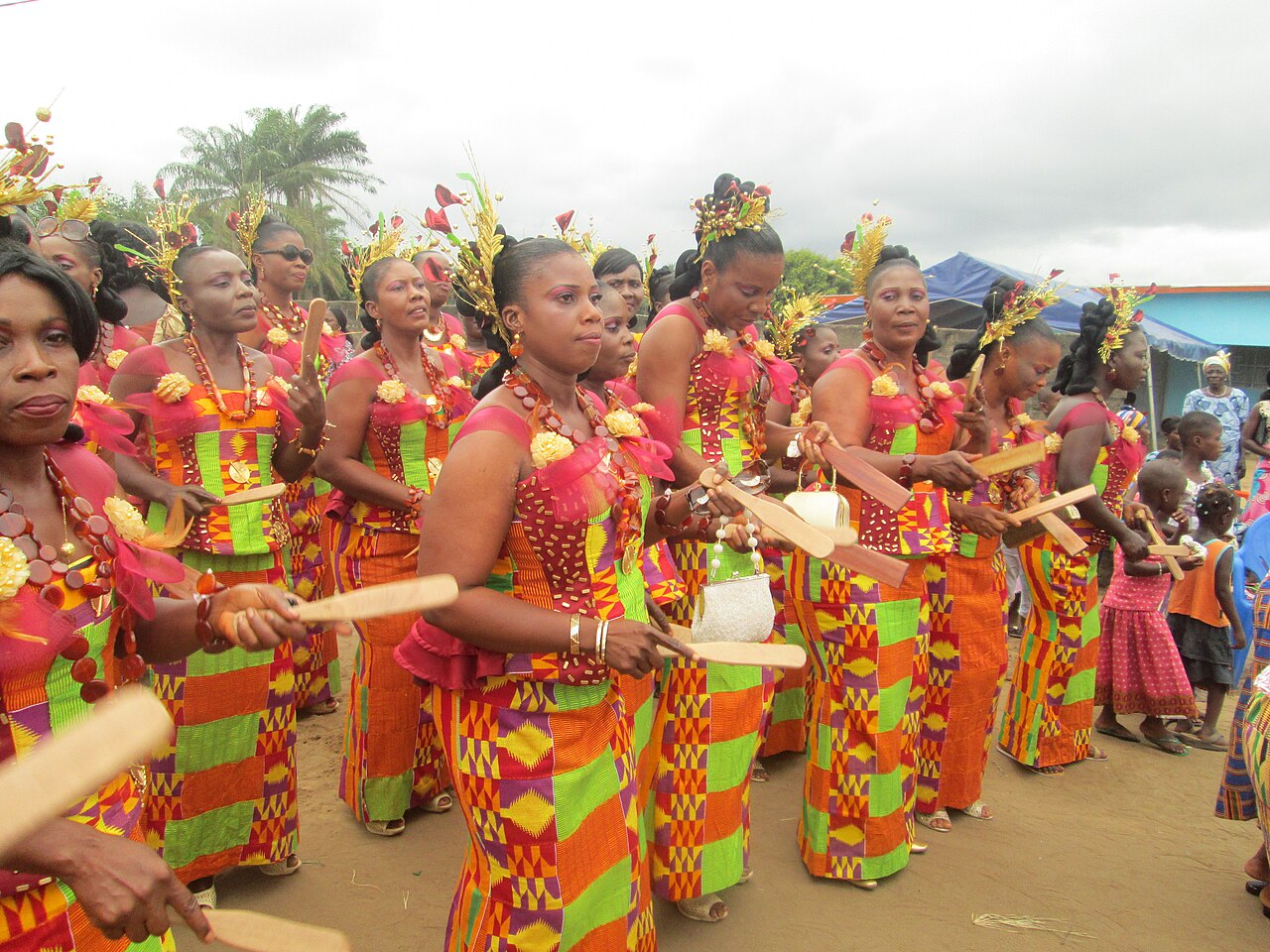
In Côte d’Ivoire, a festival can bring an entire community home. Relatives return to their villages, ceremonial cloth and jewellery emerge from family wardrobes, and music accompanies moments that carry meaning far beyond the day’s celebrations.
For travellers interested in people, history and anthropology, these gatherings offer a window into living traditions. Abissa, the fêtes des générations and the yam festivals reveal different ways of renewing community ties, passing on responsibility and honouring the ancestors. Understanding those differences makes a visit much more rewarding.
Abissa: renewal and reconciliation in Grand-Bassam
In the historic coastal town of Grand-Bassam, Abissa is one of the best-known celebrations of the N’Zima people. It combines dancing and public festivities with a sacred period of renewal, purification and reconciliation.
At its heart is the sacred drum, Edo N’Gbolé. Its ceremonial return marks an important stage in the celebrations. Around the public gatherings, music, coordinated dances, colourful clothing and the participation of different generations give Abissa its distinctive atmosphere.
Abissa also creates space for social reflection. Through forms of public expression and criticism, the community can acknowledge wrongdoing, address tensions and reaffirm the values that hold it together. The joy and spectacle belong to a celebration with a deeper purpose: beginning again as a community.
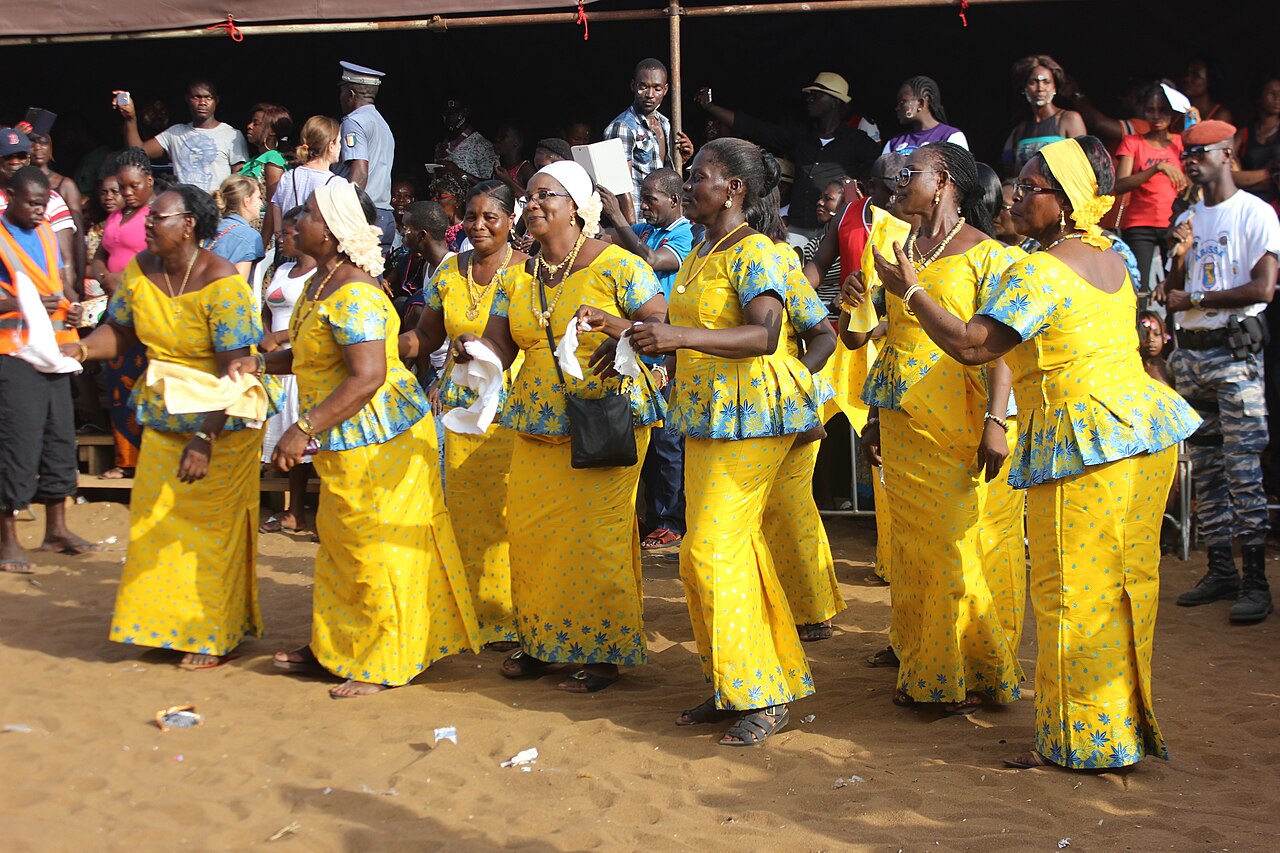
When to visit: Abissa is generally associated with October and November, but its programme can change from year to year. Confirm the dates and the public events before arranging your stay; not every stage of the celebration is open to visitors.
Fêtes des générations: belonging, maturity and responsibility
A fête des générations is closely connected to the way a community organises itself. Among the Atchan, also known as Ebrié, people belong to named generations and age groups that carry social responsibilities. Ceremonies can mark maturity, public recognition and the passing of responsibilities within village life.
In Atchan communities around Abidjan, Bingerville and Songon, the celebration is often known as Fatchué or Afatchué. Processions, ceremonial dress, music and warrior dances express the identity and cohesion of the groups taking part. The spectacle makes more sense when a local guide explains who is entering, who is being honoured and what role that group holds.
Related generational traditions also exist among other communities in southern Côte d’Ivoire, including the Adjoukrou. Their institutions and ceremonies differ: the Adjoukrou Ebeb, for example, is associated with the renewal of traditional authority. These celebrations should not be treated as one uniform festival.
When to visit: there is no single national date. Each village follows its own cycle, and a major transfer of authority may take place only after many years. For 2027, the relevant village and the nature of its ceremony need to be confirmed locally.
Yam festivals: gratitude, ancestors and a new beginning
The Fête des Ignames celebrates much more than an important food crop. In several communities, especially among Akan peoples, the yam connects the harvest with collective memory, ancestral protection and the renewal of the traditional year.
Rituals may include offerings of the first yams, libations, prayers and ceremonies involving chiefs, royal courts or spiritual leaders. In some traditions, the newly harvested yam may only be eaten after the required rites. Public celebrations can include dancing, music, processions and shared meals, although practices vary considerably between communities.
The calendar varies just as much. In the Indénié kingdom around Abengourou, recent celebrations have taken place in February or March. Other communities celebrate later: Agnibilékrou has held its festival in November, while Bédiélouo celebrations in the Moronou have taken place in December. These examples are useful context, rather than a fixed schedule for future visits.
When to visit: choose the community first, then confirm its dates. There is no single “yam festival week” across Côte d’Ivoire. We will need local confirmation of the 2027 celebrations before building a journey around them.
How to experience these celebrations respectfully
Public festivities and restricted rites may be part of the same event. A place in the crowd does not automatically mean access to every ceremony. Ask before photographing people, follow instructions around sacred objects and processions, and allow your guide to explain where visitors are welcome.
Flexibility matters, too. A ceremony may follow a rhythm that is different from a tour timetable. Leaving time to listen, observe and understand often creates the most memorable encounters.
Plan a cultural journey with Akan Travel
From our base in Grand-Bassam, Akan Travel can help you explore Côte d’Ivoire through its communities and living traditions. Tell us your travel dates and what interests you, and we can enquire with local contacts about celebrations that may coincide with your stay. Access remains subject to the community’s agreement.
Planning a trip in 2027? Contact Akan Travel to discuss a private cultural journey, or explore our Côte d’Ivoire tour. Festival attendance is arranged only when dates and visitor access have been confirmed.
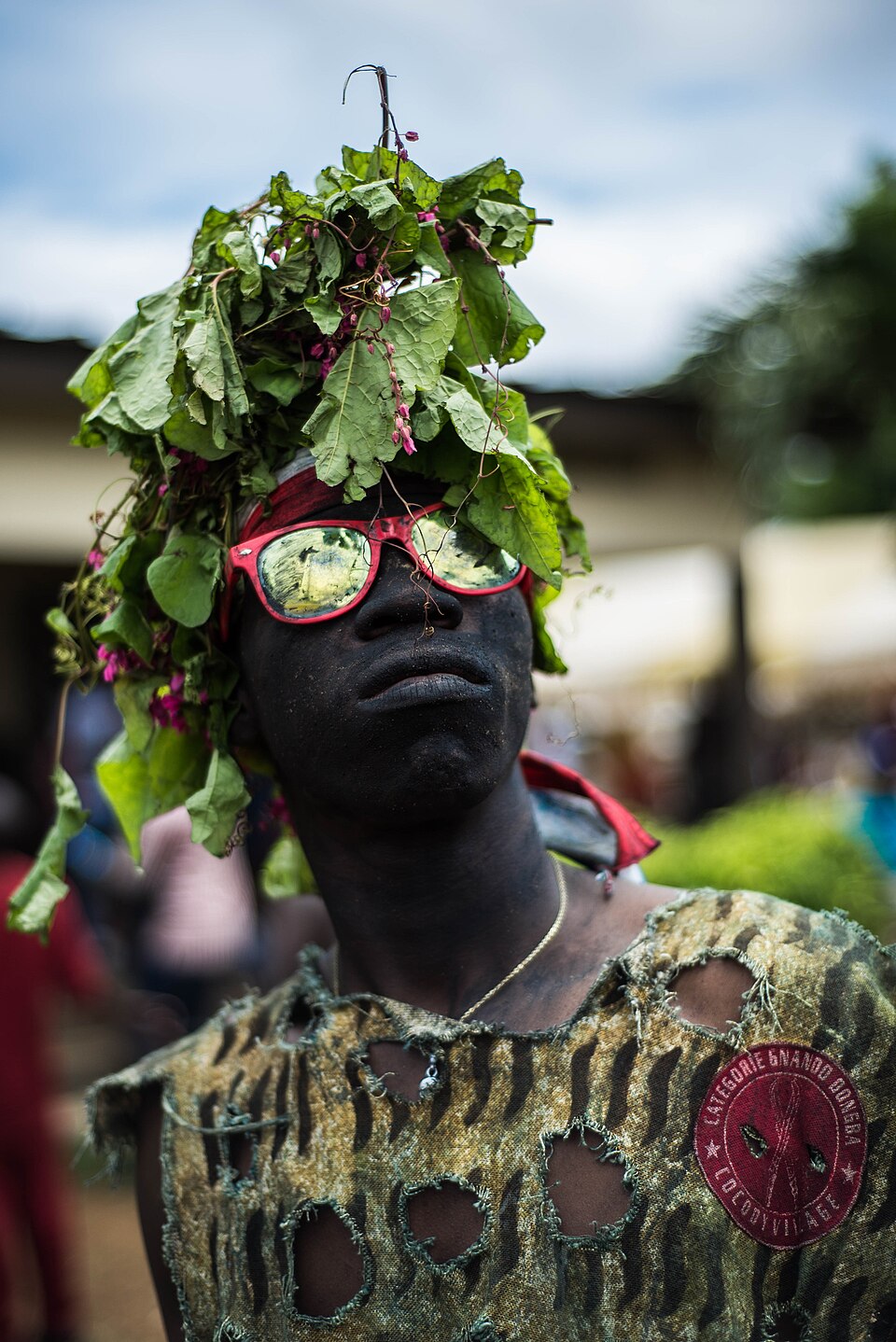
Photo credits: ChefDuVillage (cover); Michaelill16 (Abissa); SYLLA Cheick 225 (Bléssoué). Wikimedia Commons, CC BY-SA 4.0. Photographs reproduced without creative alteration.
Further reading: AIP on Abissa; Atchan generational traditions; AIP on Ebeb; AIP on yam celebrations.
Leave a Reply