Food & culture · Côte d’Ivoire
A Taste of Côte d’Ivoire
Food, markets and meals worth travelling for — from golden alloco to the traditions behind attiéké.
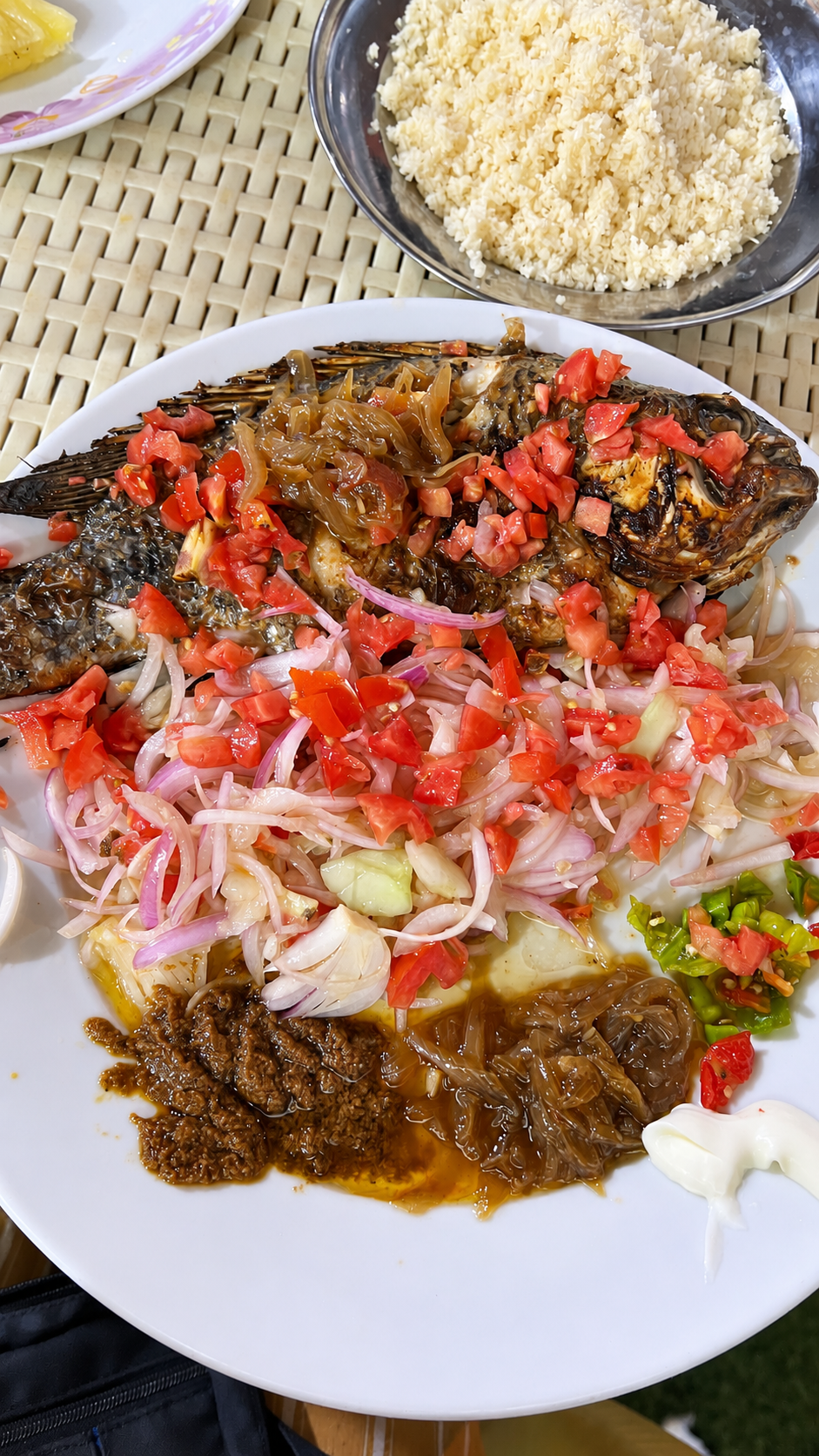
A plate of grilled fish arrives with attiéké, sliced onions and a small helping of chilli. Beside it, golden pieces of alloco are still hot from the pan. Around the table, someone reaches for another piece of plantain while the conversation continues.
Food is one of the pleasures of travelling in Côte d’Ivoire. It also offers a way into the country’s everyday life: the work of women making attiéké, the rhythm of a neighbourhood maquis, and the connections between fishing communities, markets and family kitchens.
For curious travellers, there is plenty to discover beyond the restaurant menu.
Attiéké: a taste of Ivorian identity
Attiéké looks a little like couscous, but it is made from cassava. Fermented, processed into small grains and steamed, it has a light texture and a gentle tang that works beautifully with grilled or fried fish.
Its roots lie in the lagoon communities of southern Côte d’Ivoire, where women have passed down the skills of making it through generations. Behind a seemingly simple serving is a demanding process, involving several stages of preparation before the grains reach the table.
In 2024, UNESCO inscribed the skills related to attiéké production on its Representative List of the Intangible Cultural Heritage of Humanity. The recognition celebrates the knowledge, transmission and community life surrounding its production.
When an opportunity to meet producers is arranged with their agreement, watching part of this process adds another dimension to a meal you may already have enjoyed several times during your journey.
Garba: an Abidjan favourite
Garba brings together attiéké and fried tuna in a filling meal closely associated with everyday life in Abidjan. It is a popular, affordable dish, eaten across different social groups.
For visitors, trying it offers a chance to get to know a different side of the city’s food scene. A modest food stall can be just as memorable as a restaurant, especially when someone familiar with the neighbourhood helps you understand what to order and how it is served.
Alloco: golden, sweet and hard to resist

Alloco is made from ripe plantain, cut into pieces and fried until golden. The outside takes on a caramelised flavour while the centre stays soft.
It can accompany fish or chicken, or be served with eggs and a tomato and chilli sauce. The combination of sweet plantain and savoury, spicy accompaniments makes it an easy favourite.
It is also a useful introduction for travellers unfamiliar with Ivorian cooking: order a portion for the table and discover how quickly it disappears.
Grilled fish and chicken
Poisson braisé and poulet braisé are familiar sights on Ivorian menus. Served with attiéké, they make an inviting first meal for visitors discovering the country’s cuisine.
Along the coast, a fish lunch can become part of a wider day exploring the relationship between communities and the sea. In Grand-Bassam, encounters with Nzima fishing communities can bring visitors closer to the work behind the meal, from fishermen bringing in their catch to women preparing and smoking fish.
These encounters depend on people’s availability and willingness to welcome visitors. Take time to talk, and ask before photographing someone at work.
Kédjénou, foutou and the pleasure of a good sauce
There is much more to discover beyond the grill.
Kédjénou is a slow-cooked dish, commonly prepared with chicken and vegetables in a covered pot. Foutou, made with plantain or yam, is served with sauces such as sauce graine, made from the pulp of oil-palm fruit. Another dish to look for is placali, a cassava preparation often paired with okra sauce.
Recipes and accompaniments vary between regions and households. Trying these dishes introduces different textures as well as flavours, from the soft consistency of foutou to the distinctive texture of okra.
Ask what is cooking that day. A conversation about a sauce, an ingredient or a family recipe can be as rewarding as the meal itself.
Make time for a maquis
A maquis is a popular local place to eat and drink, often with music or a television contributing to the atmosphere. These informal establishments are an important part of the urban food scene.
Leave room in your itinerary for a relaxed meal. Order something unfamiliar, ask for the chilli separately if you prefer, and enjoy the time around the table.
Discover Côte d’Ivoire through its food
A market visit, a conversation with an attiéké producer or a fish lunch in Grand-Bassam can help connect the places you visit with the people who live and work there.
At Akan Travel, we believe these everyday encounters deserve a place alongside the country’s festivals, landscapes and cultural heritage.
Planning a journey to Côte d’Ivoire? Tell us what you would love to discover, and we can help you include local food and meaningful encounters in your itinerary.
Photography: Cover: Akan Travel, from an original photograph, retouched for light and colour. Alloco: Jacquitoz, Wikimedia Commons, CC BY-SA 4.0. CC BY-SA 4.0 applies to the alloco photograph.
Leave a Reply